Sheep Days

I've thought a lot about the decisions that changed my life — the ones that didn't announce themselves, didn't come with any warning. Most of mine weren't dramatic. They were small. Easy to walk past. And you don't know what they were until you're standing on the other side of them, looking back.
I started running sheep on the side while I was still working as assistant manager and cowboy for an outfit called Otter Creek Grazing. The lease had come due on our home ranch we'd rented out to neighbors before college. I wanted to do my own thing. So I finagled an ag loan, bought a half-band of ewes in the fall, got them bred, and got started.
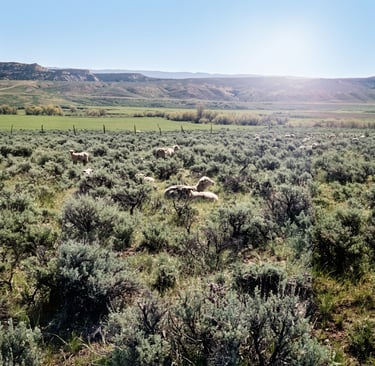
One of my good friends came from a sheep outfit — his dad had trailed their bands across the basin since he was a boy, built a real operation, two sons followed him into it. One of those sons got me started.
Sheep take a different kind of management than cattle. More intense. More unforgiving. There used to be real money in it — shear them in spring, sell the wool, and hope the wool check covered your winter feed costs. Whatever the lambs brought made the ranch business work. Men bought land that way in the thirties, forties, fifties. By the time I got in, the margins had thinned, but sheep were still less capital-intensive than cattle. A hard way to make a living, but a possible one.
I ran that outfit for four or five years, kept my day job for two of them. At the end of that second year my employers told me plainly: work for them or work for myself. The situation had already made the decision. I went out on my own.
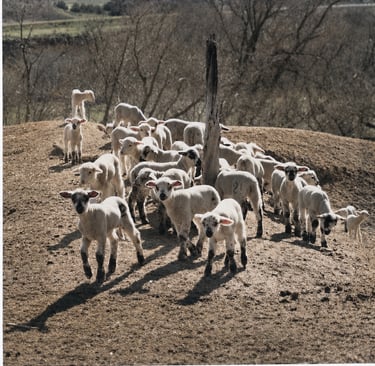
The heart of the whole operation was shed lambing — and if you want to give yourself problems you haven't thought of yet, put five hundred ewes in a small space in March and help them have their lambs. You can't range lamb in Wyoming in March. One storm wipes you out. So you bring them in, and that's where it starts.
Early on it's manageable. But once you've got newborns, lambs a couple weeks old, and everything in between all needing something different at the same time — that's when the real weight lands on you. Something always breaks. Something always goes sideways. You are making decisions, some of them with life on the line, one right after another without stopping.
Animal husbandry. I don't know where the term came from, but I know what it meant to me — putting out fires, constantly, in a small shed, in the cold, until the work was done or the sun came up. Whichever came last.
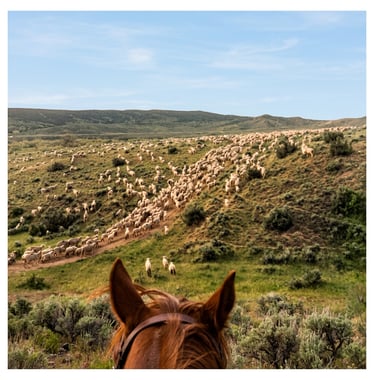
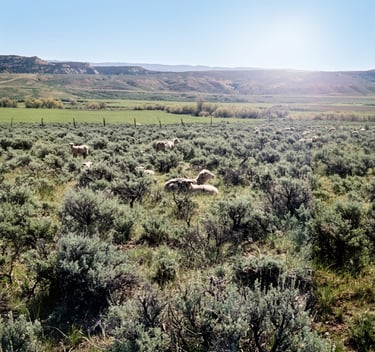
When lambing was over it came time to head for the hills. Turn them out to spring grass. We didn't have a herder, so I'd ride out from the barns every morning and do a check — a few hours out and back on horseback — then come back and try to get other work done. Fields prepped for planting, ditches cleaned, trying to get ready to start irrigating hayfields. Then we gathered them and trailed to the mountains where they'd spend the summer. And all the while, trying to get around and repair fences, keep irrigation water spread on the hayfields at the home ranch, put up hay. Really needing to be in two or three places at once. Some guys make that work better than others. I struggled trying to get a system I could manage.
The replacements to your herd — just like replacement of culls in a cow herd — is a big deal. I hadn't got to the point where I could keep ewe lambs from my own flock to replace the ones that dropped out every year through death or culling. I was running old ewes with a high cull rate. You can mouth an animal to tell how old they are — look at their teeth and make a judgement. When the teeth start separating, when they're starting to lose them, they're getting old. Possibly to the point they won't raise you a lamb. When they get to be five to seven years old you might get a couple more years out of them, depending on body condition and your management plan. But the turnover for someone running aged ewes is high.
After a couple of years in it, I bought some replacement ewes at a sale barn. That got me by for one year. Then we decided we needed to expand to make things work. A ranch was selling out — had their entire herd, all ages, for sale. I saw it as my chance.
So I went over and looked through his bunch and decided to buy them. When we were loading up, there was one with a bad foot. We tipped her over and looked at it, and the seller — he was an order buyer, a kind of go-between — looked at her feet and said, "This is a little bit of foot rot, no big deal, we'll throw her in for free."
So I agreed.
The rest of this story is part of a book I'm finishing up, the hard lessons this life has handed me, one story at a time. Want to know the day it's ready? Sign up below and I'll let you know the moment it's out.
Realwesternlife
Authenticity guaranteed
© 2025. All rights reserved.
Get in Touch:
Orders & Customer Service
orders@realwesternlife.com
General Inquiries
hello@realwesternlife.com
Business, Legal & Privacy
admin@realwesternlife.com
Call or Text
307-240-9474
Our store is