
The Bull Pasture Gate

I was ten, maybe eleven, the first time I understood what a gate actually guards — and it wasn't the bull pasture gate that taught me. That one came later. This one was two gates down past the bridge, where we kept the milk cows.
We had a couple of Jerseys back then, milked morning and night, back before milk came from town in a jug. My grandmother ran the cream separator after every milking — whole milk in one bucket, cream in the other — and whatever wasn't drank by the family and crew turned to butter or whatever else she had going that day.
There wasn't any pasture worth turning cows into right by the barn, so we pushed them down the hill, across the bridge, into a stretch of willows along the river — thick brush, thicker mosquitoes, the kind of place a cow could stand belly-deep in shade through the heat of the day. Past the willows sat one of the alfalfa fields. Two gates stood between the willows and that alfalfa, and on a chore day — moving a canvas dam down the ditch, changing a head of water — you went through both of them.
Sometimes we closed them. Sometimes we said we'd be right back.
One afternoon, be right back turned into not quite. I came back through the willows to find the whole milk cow herd twenty feet into the alfalfa, heads down, working through it like they had all day to do it. A Jersey can wrap her tongue around a bushel basket of grass and have it gone in a few minutes, and green alfalfa doesn't sit in every cow's gut the way it sits in the ones that are used to it.
I pushed them back through the gate, but it was already too late to matter. Within the hour, one cow's sides had gone from a milk cow's regular barrel to something tight and round I'd never seen a Jersey wear before — hide stretched over gas instead of grass. My dad and my uncle didn't stop to explain what I'd done. They didn't have time. They got a hose down her and walked her in slow circles around the corral to keep the gas moving instead of settling, and they kept at it for hours — drench her, walk her, watch her, drench her again — while I stood at the rail and watched a cow I'd turned loose maybe die because I hadn't taken a minute and closed the gate.
She made it. By evening the swelling had come down enough that she could lie down in the shade like nothing had happened. But I never forgot the look of her stretched tight like that, or the hours it took a grown man to undo twenty minutes I'd decided didn't matter.
Nobody had to give me a look after that. I'd already gotten the lesson from the cow.
Four years on, I was old enough to be trusted with a bigger gate — the one on the fenceline that split three of our biggest hay fields from the largest pasture on the place. We called it the bull pasture gate. A single road crossed it if you were headed to the lower end. Dust-rutted in summer, frozen mud in winter. You were either on one side of it or the other.
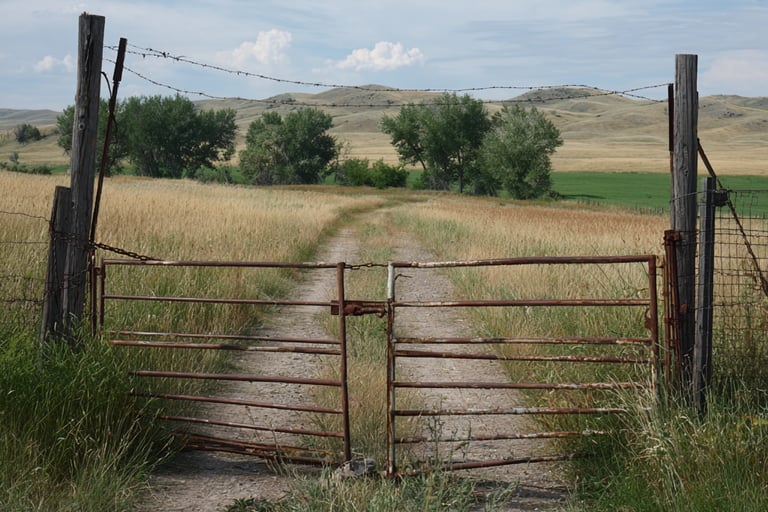
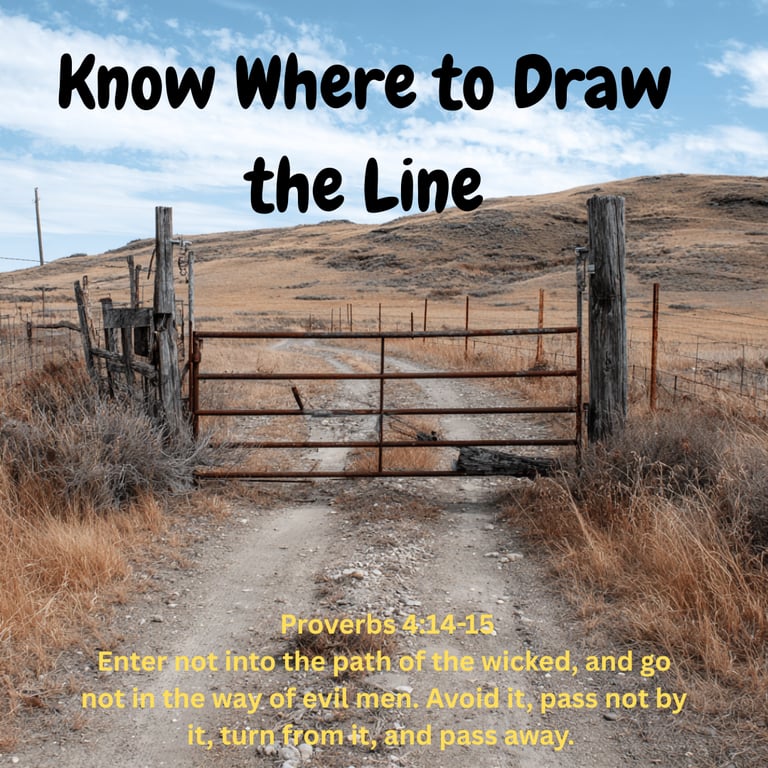
The gate itself wasn't much. Welded pipe, four strands of barbed wire stretched tight on either side, a chain latch that rattled when you worked it. In July, the metal burned your hands. In January, it froze to your gloves if you weren't careful. The hinges squealed no matter how much you greased them, and the whole thing sagged just enough that you had to lift while you swung it.
But that gate held a line.
On one side: three hundred acres of flood-irrigated hay ground, mostly alfalfa, some grass mix where the water pooled. On the other side: open country — sagebrush, a few rocky draws, native grass, boxelder trees where the cattle bedded down in the heat. That's where the money lived, Herefords and black Angus, the whole reason the ranch existed. They grazed what couldn't be leveled or cleared, and they stayed out of the fields because that gate stayed closed.
The rest of this story is part of a book I'm finishing up, the hard lessons this life has handed me, one story at a time. Want to know the day it's ready? Sign up below and I'll let you know the moment it's out.
Realwesternlife
Authenticity guaranteed
© 2025. All rights reserved.
Get in Touch:
Orders & Customer Service
orders@realwesternlife.com
General Inquiries
hello@realwesternlife.com
Business, Legal & Privacy
admin@realwesternlife.com
Call or Text
307-240-9474
Our store is