


The Long Way Home
She called on a Tuesday, like she does most weeks now, somewhere between the front desk and whatever guest needed extra towels. "Slow night," she said. "Got a minute?" I always have a minute for her. We talked about nothing important —her 13 year old dog, her car making a sound she didn't like, her husband’s dreadful work schedule. Twenty minutes, maybe thirty. Before we hung up she laughed at something and said, "Love you, Dad." I sat there after the call ended longer than I needed to, phone still warm in my hand, thinking about how ordinary that sentence sounded now, and how long it took to get here.
There was a sentence I used to say about my marriage. I’d say it half jokingly as though it were just one of the oddities every couple has. "She can unload on me, and if I walk in another room, it’s like somebody flipped a switch. For me, it’s like it never happened."
I wasn't trying to make light of it. At the time, I had no idea there was anything underneath it. I thought it said something good about me. I figured I'd found a way to let things roll off my back. I never imagined it wasn't resilience at all.
I was a man who handled things. Whatever life put in front of me, I figured a way through it, same as I'd figure out keeping feed in front of a thousand cows or a heifer with a backwards calf at 2:00 in the morning. That's just who I'd always been.
It wasn't until years later, alone at a computer, typing "reasons for short-term memory loss" into a search bar for reasons that had nothing to do with her, that the sentence came back to me. This time it didn't sound like a joke. It sounded like a diagnosis I'd handed someone without knowing I was the patient.
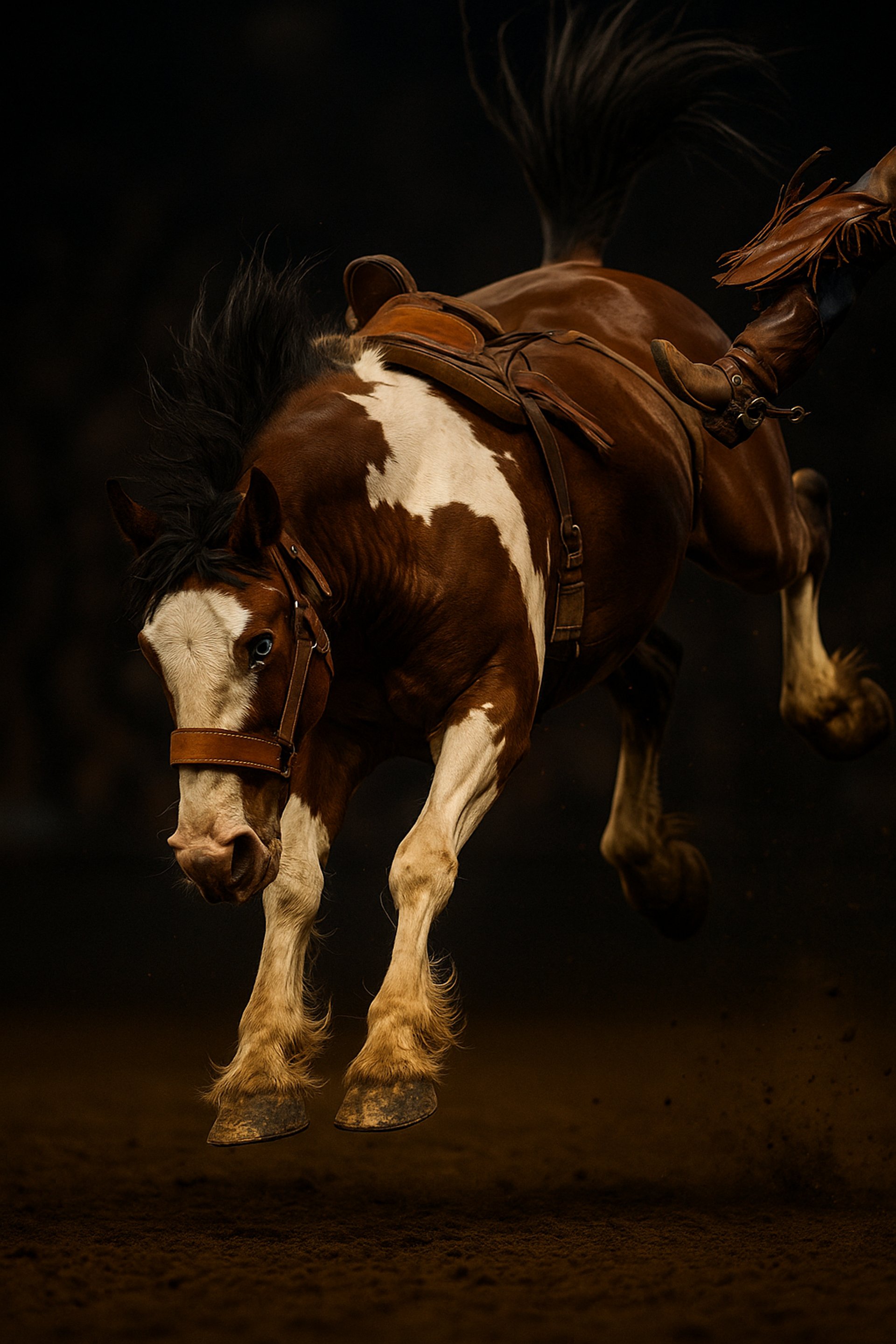
What I didn't understand, back when I talked about it in conversation with a friend, was that I'd built an entire way of surviving on top of something I couldn't name. I thought I was even-keeled. I thought I was patient. What I actually was, was disconnected — walking through a door and leaving pieces of the argument behind on the other side of it, not because I'd forgiven anything, but because some part of me had learned to just not carry it. I didn't choose that. It chose me, somewhere along the way, the same way a horse that's been jerked around enough will eventually quit fighting the bit. Not broken, exactly. Just done arguing with the rope.
I'd always been fiercely independent. Proudly so. It got ingrained nearly before I could walk from the life we led on a ranch in the middle of nowhere Wyoming. I liked it that way. I figured whatever got thrown at me, I'd handle it, same as I'd handled lambing season, same as I'd handled a lot of thirsty cows that had nothing to drink. I had handled everything. Until I didn't.
What came for me didn't come from the direction I was watching. It came from inside my own house, slow enough that I couldn't point to the day it started, and by the time I understood what was happening to my mind in that marriage, and what was happening to my daughter in the middle of it, I was already on my knees. Not metaphorically — I mean the kind where you stop pretending you're the one steering.
I'd always said I believed God was sovereign. I'd have told you that on any given Sunday. But there's a difference between holding a belief and having it driven into you like a fence post, and I didn't know that difference until the ground gave out. I think about Job sometimes — not the version I read about several times in my bible, the man who loses everything and still won't curse God — but the version you only understand once you've walked even a short stretch of a similar road. I haven't lost what Job lost. But I've lost enough to know that his patience wasn't a personality trait. It was something he didn't have until he needed it, and it cost him plenty to get it.
The divorce didn't fix anything quickly. Neither did the knowledge. I thought once I understood what had been happening — to my memory, to my daughter, to all of us — that understanding would be the thing that saved me. It wasn't. In the heat of an argument, I still reverted to old habits long after I knew better. Knowing the shape of the trap didn't keep me from walking into it again. That took longer. That took years of practicing the same correction, the way you retrain a horse that's learned the wrong lead — not by explaining the lesson, but by riding it through, wrong steps and all, until the right one finally sticks without you having to think about it.
The hardest part wasn't my own healing. It was watching my daughter live inside something she was too young to have a side in, and having no way to shortcut her through it. For years she had to choose her mother's version of things, over and over, just to keep her own footing solid. I understood why. I still understand why. But understanding it didn't make it easier to watch, and it didn't bring her back any faster than the knowledge brought me back to myself.
What finally changed things wasn't a conversation, or an apology, or anything I did right. It was time. She aged out of needing to choose, and some distance opened up between her and her mother, and in that distance she had room to find her own footing instead of someone else's. That space let me breathe too. It let me think instead of just react, finally, after years of reacting being the only gear I had. And somewhere in that slower stretch of road, I found something in myself I hadn't expected — a measure of compassion for my ex that wouldn't have made any sense to me years earlier. Not because she's owed it. Because carrying anything else for that long just wears a man down to nothing, and I had a daughter who needed more of me than that.
None of this came on a schedule I'd have chosen. I used to think knowledge was supposed to work like a key — you find the right one, the lock turns, and you walk through changed. That's not how it went. The knowledge just sat there, mostly useless, for longer than I wanted, until enough years of living wore it down into something I could actually use. Patience with my daughter's timeline. Compassion for my ex. Neither one arrived because I figured something out. They arrived because I outlasted the part of me that couldn't yet hold them.
I don't live the life I used to picture for myself. I had pieces of it for a while, here and there — a good stretch of years, a stretch of peace — but they never lasted as long as I expected them to. More like a day hike that ends a few hours before you wanted it to, instead of the long ride I'd always pictured. I used to take that personally, like I was owed more trail than I got. I don't anymore. I've come to hold the good times a little differently now — less entitled to them, more grateful when they linger, because I know now they don't have to.
My daughter and I don't talk about most of it. We don't talk about the years she had to take her mother's side just to survive her own house, or whether she understands what that cost either of us. I don't bring it up. Maybe she doesn't remember it the way I do, or maybe she remembers it just fine and has decided, same as I have, that some water is better left running downstream than dredged back up. Someday we might wade into it, if there's ever a reason good enough to disturb what's settled. For now I let it run.
What we have instead is a Tuesday-night phone call from behind a hotel desk, twenty minutes about nothing, and a girl who calls her dad just because there's nobody at the counter and she wants to talk to him. That's not the life I dreamed of at thirty nine. It's not the long ride. But it's real, and it came the hard way, and I've learned not to mistake "hard way" for "wrong way."
I think God does build a man before He hands him the life that's supposed to be his. I think He starts by taking the comfort out from under you. You look at things different when life gets hard. He isolates you long enough that you stop pretending you can handle everything alone, because that pretending was never faith, it was just pride wearing faith's clothes. He asks you to stand on something solid when everything visible is gone, and most days you don't stand so much as you just don't fall down all the way.
I don't know what's still coming. I know the rope still has slack to play out yet. But I know now that the waiting isn't empty, even when it feels like it — it's the part where the man gets built who can actually carry what's coming. And I know that when the phone rings on a slow Tuesday night, and it's her, and she just wants to talk, that's worth more to me than the long ride I used to think I was owed.
Realwesternlife
Authenticity guaranteed
© 2025. All rights reserved.
Get in Touch:
Orders & Customer Service
orders@realwesternlife.com
General Inquiries
hello@realwesternlife.com
Business, Legal & Privacy
admin@realwesternlife.com
Call or Text
307-240-9474
Our store is